
Essential care for a puppy in its first weeks
What you give your puppy in its first weeks of life has a lasting impact on its health and wellbeing forever. Here you'll find everything you need to know to start off on the right foot.
The key stages of early development
Understanding which stage your puppy is in helps you know what it needs at each moment:
0 – 3 weeks: neonatal stage
Puppies are completely dependent on their mother. They can't see, hear or regulate their temperature. The colostrum (the first mother's milk) provides essential antibodies for their immune system. They should never be separated from the mother during this period.
3 – 8 weeks: transition and canine socialization stage
They open their eyes and ears. They begin to interact with their siblings, learning canine language, bite inhibition and hierarchy. Around 4 weeks the gradual weaning process toward solid food begins.
8 – 16 weeks: arrival at the home and human socialization
The optimal age for a puppy to arrive at its new home is between 8 and 10 weeks. It's in the middle of the sensitive stage: everything it learns now (people, sounds, spaces, routines) will form the basis of its adult character.
Feeding: what your puppy needs
A healthy puppy should double its weight in the first 10 days of life. From 4 weeks, when weaning begins:
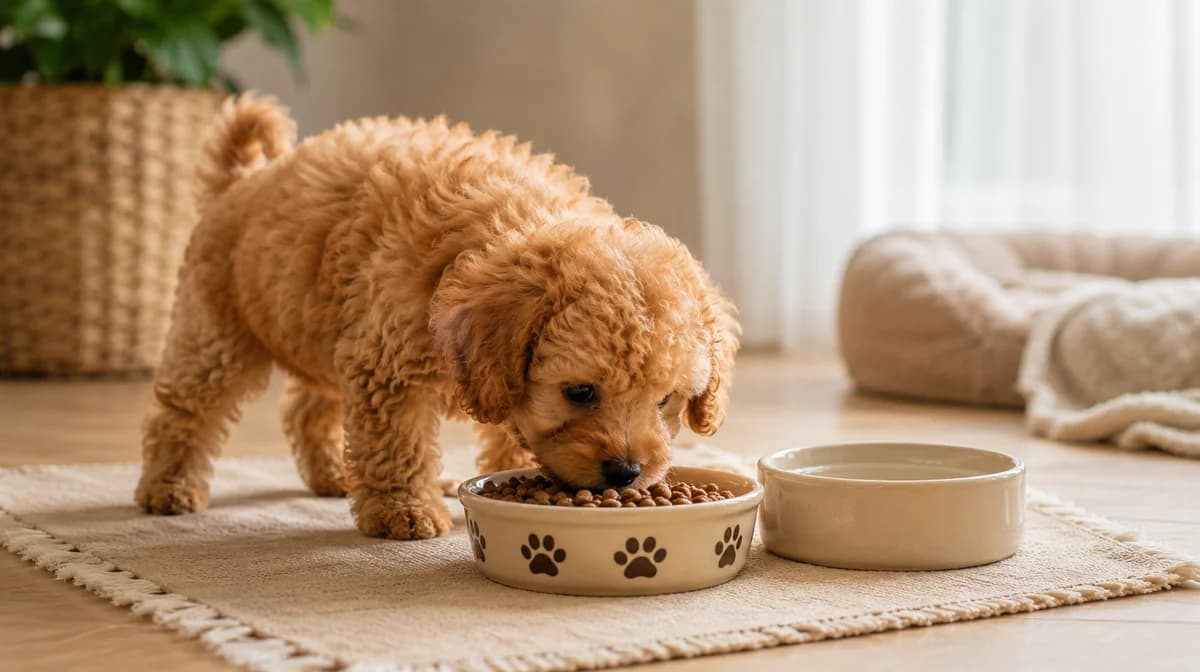
- Offer high-quality food that is specific for puppies (adult food won't do; the nutritional requirements are different).
- Moisten the kibble with warm water during the first weeks to make chewing easier.
- Split the ration into 3 to 4 meals a day. A puppy's stomach is small and can't process large amounts at once.
- It should always have fresh water available.
- Avoid human foods: grapes, onion, garlic, chocolate and avocado are toxic to dogs.
Health: vaccines, deworming and vet visits
Basic vaccination schedule
Deworming: almost all puppies are born with intestinal parasites (roundworms). The standard protocol is to deworm at 2, 4, 6 and 8 weeks, and then monthly until 6 months. Always check with your vet for the right product and dose according to weight.
Parvovirus: puppies are at greatest risk between 6 and 16 weeks, when maternal immunity declines but the vaccines have not yet taken full effect. During this period, avoid taking them to parks or areas with feces from unfamiliar dogs.
Temperature, sleep and a safe environment
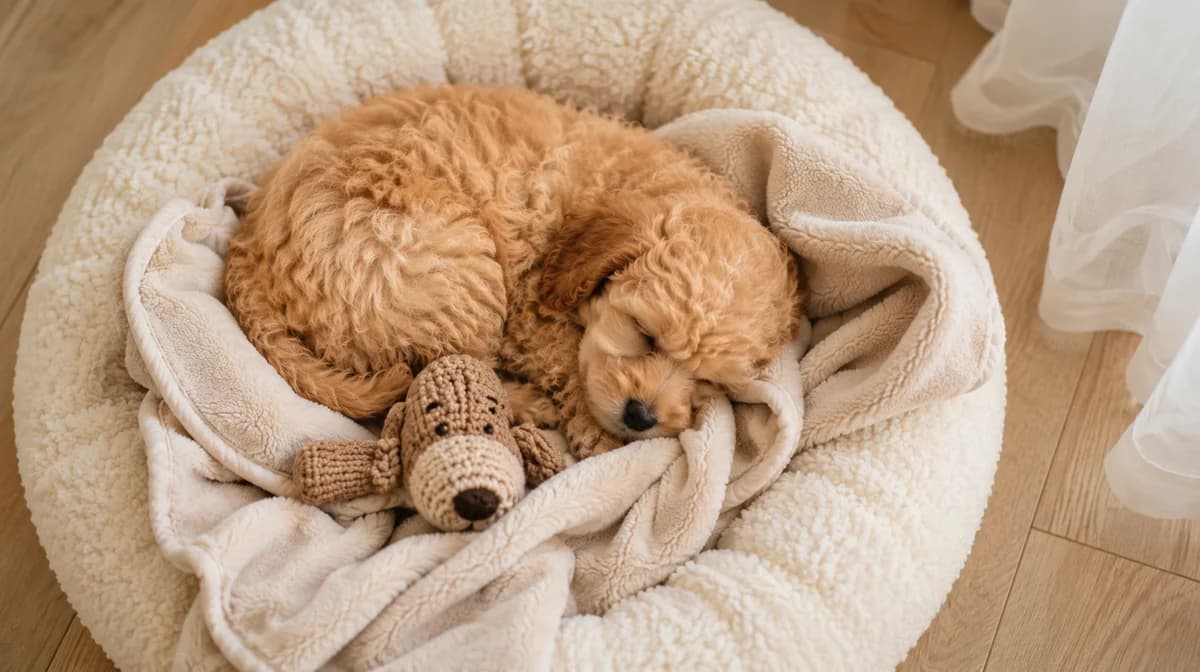
- Temperature: puppies under 4 weeks don't regulate their temperature. The resting area should be kept between 29-32 °C the first week, gradually lowering to 21-24 °C by one month of age.
- Sleep: a young puppy sleeps between 16 and 20 hours a day. This is normal and necessary for its brain and physical development.
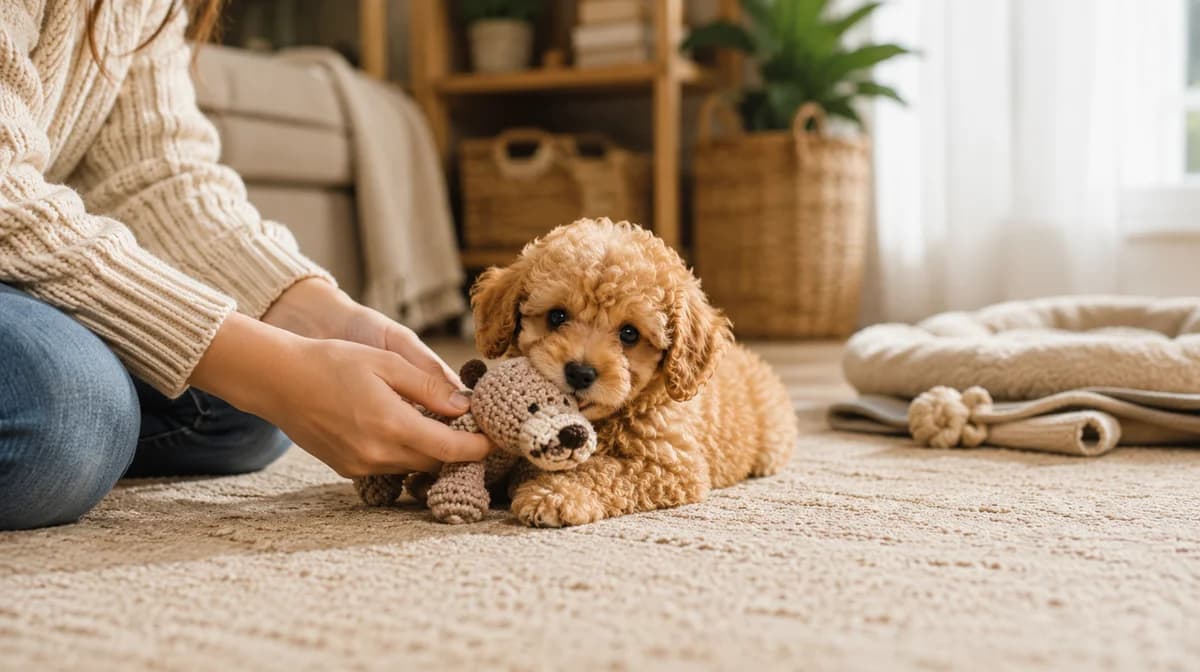
- Safe space: remove electrical cords, toxic plants, medications and small objects it could swallow. A playpen or fenced area is ideal for its first weeks at home.
- Don't over-stimulate: visits from strangers should be introduced gradually. The puppy needs rest between stimuli.
Do you want to bring a puppy into your home?
We support you through the whole process: from choosing the breed to the first days at home.
Talk to an advisor